
“It Didn’t Look Like Drowning”
The biggest misconception in aquatic safety isn’t that people panic in the water. It’s that drowning looks dramatic.
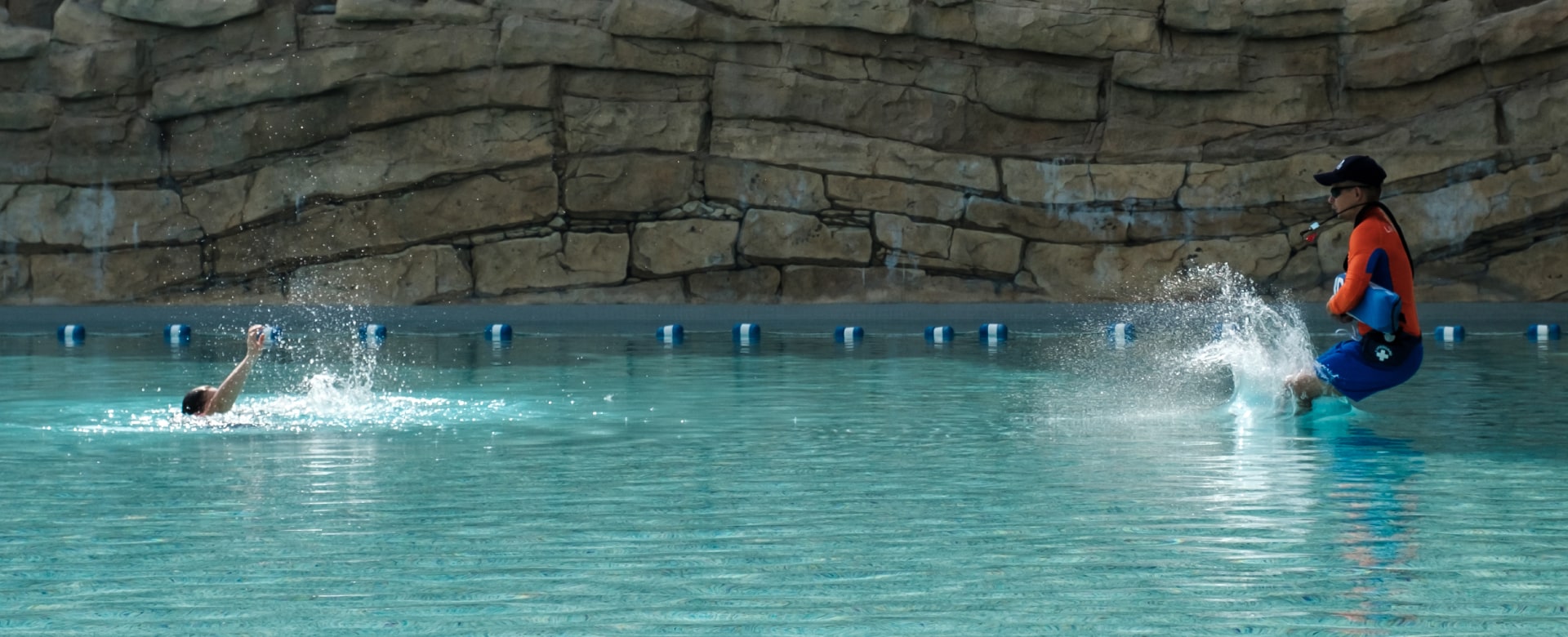
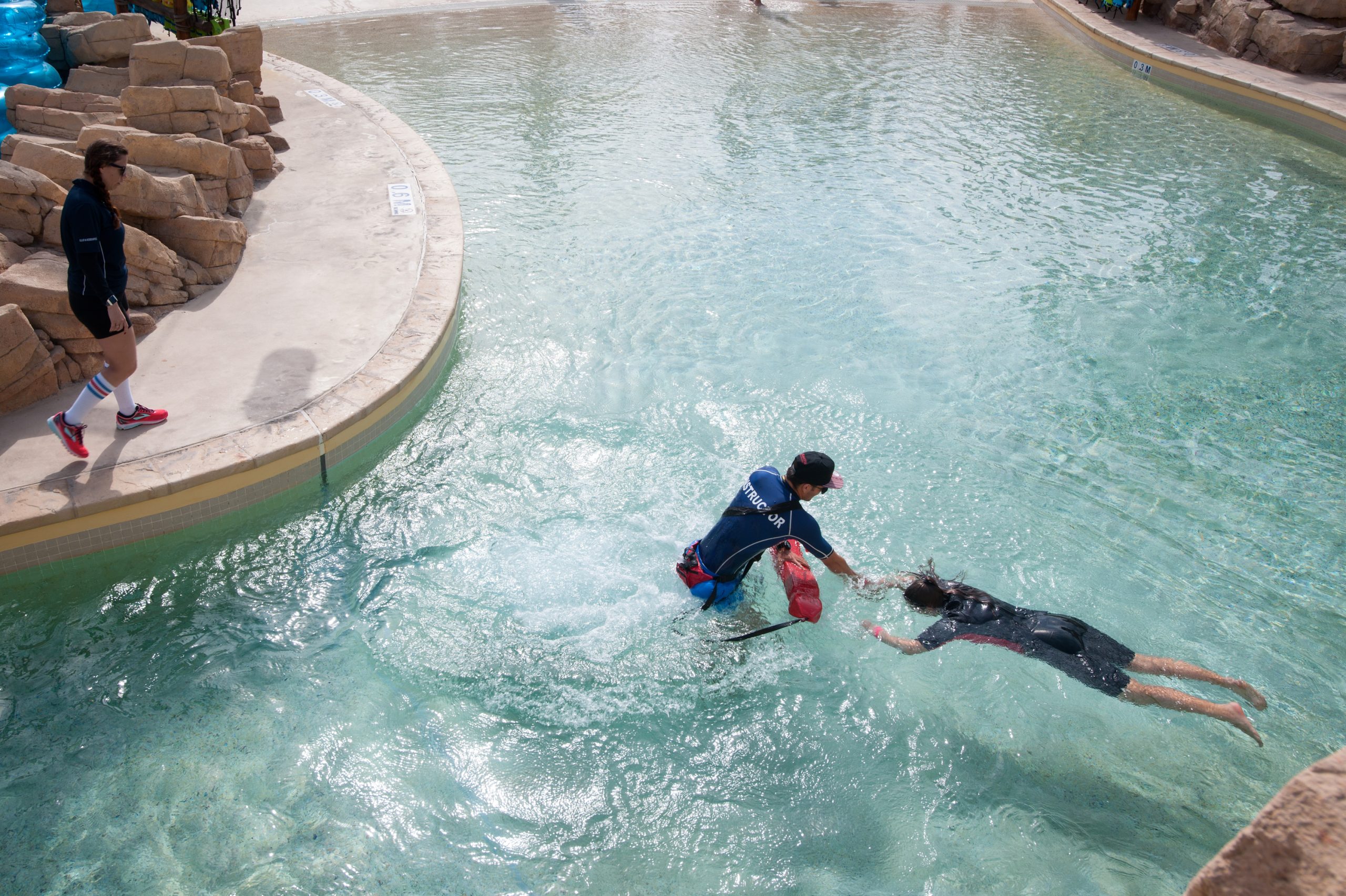
Recently, a trained lifeguard said: “It didn’t look like drowning.” Thankfully, this was during a training drill, but it indicates a situation that aquatics leaders need to pay attention to. Popular media has created a mental image of drowning that is easy to spot – chaotic, desperate, unmistakable shouting. And apparently, even lifeguards can default to this expectation.
In reality, drowning rarely matches the Hollywood version we all expect. Research into drowning shows that someone in trouble cannot call out, wave or thrash effectively. The body is fully committed to the most basic survival action: breathing.
This means distress signals are subtle, brief and can easily be misinterpreted: just like they were on this training drill.
Globally, drowning claims an estimated 300,000 lives each year. And yet, most of these incidents occur silently, often in plain sight, unnoticed until it’s too late (WHO, 2024). So how is it that we all know that drowning isn’t dramatic, but there’s still, if we are speaking honestly, doubts and hesitancy – even in the minds of trained professionals?
The answer is that because understanding the theory of drowning and recognising it in real time are two very different things. Field-based vigilance testing conducted across operational aquatic facilities has shown that lifeguards often take over one minute, on average, to detect a submerged victim, with fewer than 10% identifying it within the first 10 seconds. These confronting findings, reported through applied human factors research based on Ellis & Associates’ work, highlight a very real gap between what we expect lifeguards to see and what they are actually able to pick up in a busy environment.
Part of the challenge is that the visual cues we’re asking lifeguards to detect can be incredibly subtle. A person in active distress doesn’t look dramatic: they’re often vertical in the water, making small, ineffective movements, just trying to keep their airway above the surface. In a quiet pool, that might stand out. In a busy one, it can look like almost anything: someone leaning back to relax, a child playing, or simply adjusting their position.
It’s also not just what lifeguards are seeing, but how they are processing what they are seeing.

The brain is constantly absorbing and processing an overwhelming stream of audio and visual information – most of it unconsciously – while only a small portion ever reaches conscious awareness. To manage this, our brains filter aggressively, deciding what is worth attention and what can be ignored.
Research in Human Factors and Ergonomics shows that sustained monitoring tasks are inherently unstable – and to be honest, we all know this. What we may not realise, however, is that it is not just because people get tired that we lose focus, but also because of this aggressive constant filtering and prioritising that the brain is engaged in.
Over time, this leads to a “vigilance decrement,” where detection accuracy declines and, critically, observers become less likely to interpret ambiguous behaviour as a problem. In environments like aquatic facilities, where movement is constant and most activity is unremarkable, this means lifeguards may be looking directly at a swimmer in distress but subconsciously categorising that behaviour as normal. The challenge, then, isn’t just visibility; it’s interpretation. And that is where even trained professionals can struggle.
The question for aquatic operations managers isn’t simply whether their lifeguards have been taught what drowning looks like, but whether they are consistently able to recognise it in the environments they are actually working in.
Recognition is not a static skill. It is influenced by environment, workload and the way surveillance is trained and reinforced over time. This raises important questions for anyone responsible for aquatic safety, such as:
- Are my lifeguards being trained to recognise subtle, ambiguous behaviours or only obvious ones?
- Are the scanning and surveillance skills actively practised in realistic, operational conditions?
- Is performance tested in a way that reflects the complexity of a live environment?
- And importantly, are my teams getting feedback on what they miss, not just what they respond to?
Because if we accept that drowning can be quiet, fast and easily misinterpreted – and then add the fact that human performance is inherently variable – then effective lifeguard training cannot rely on theory alone. It has to be built around recognition, performance and continuous refinement in real-world conditions.

Research consistently shows that understanding a concept does not guarantee the ability to apply it under pressure. Skilled performance depends on procedural learning and context-specific practice rather than knowledge alone.
In simple terms, knowing what drowning looks like is not the same as actually being able to recognise it in real time.
That should make you stop and think about what you are doing. Across the industry, there is often solid investment of time, effort and cost into training lifeguards, but far less into understanding how that training holds up in practice. Training, and indeed certification, is just the beginning of your aquatic risk management.
Acknowledging the science that recognition is influenced by environment, workload and human limitation, means that knowing that maintaining effective surveillance isn’t something that can be achieved through “getting lifeguards certified”. It requires ongoing focus, deliberate practice and a willingness to test performance in the conditions that matter most.
This is where leading aquatic facilities shift their approach: placing greater emphasis on how lifeguards scan, what they prioritise and how consistently they are able to identify early signs of distress in real environments (not how fast they can swim there). It’s not just about ticking that compliance box; it’s about understanding how your team actually performs when it counts, and setting them up for success in that manner.
More and more operations are starting to look beyond traditional training – not just at what their teams know, but at how they actually perform in the environments they work in. SST‘s scanning clinics, unannounced audits and full service risk management programs do exactly that: challenge performance, build recognition and uncover the gaps that aren’t always visible through traditional training alone.
The real risk isn’t that drowning is hard to see. It’s that sometimes, we’re looking right at it – and don’t recognise it.
Want to know more about our services and how we can help your team and facility? Fill in our contact form and we’ll be back in touch.