
The Art of Noticing: What a Michelin-Starred Hot Dog Teaches Us About Aquatic Safety
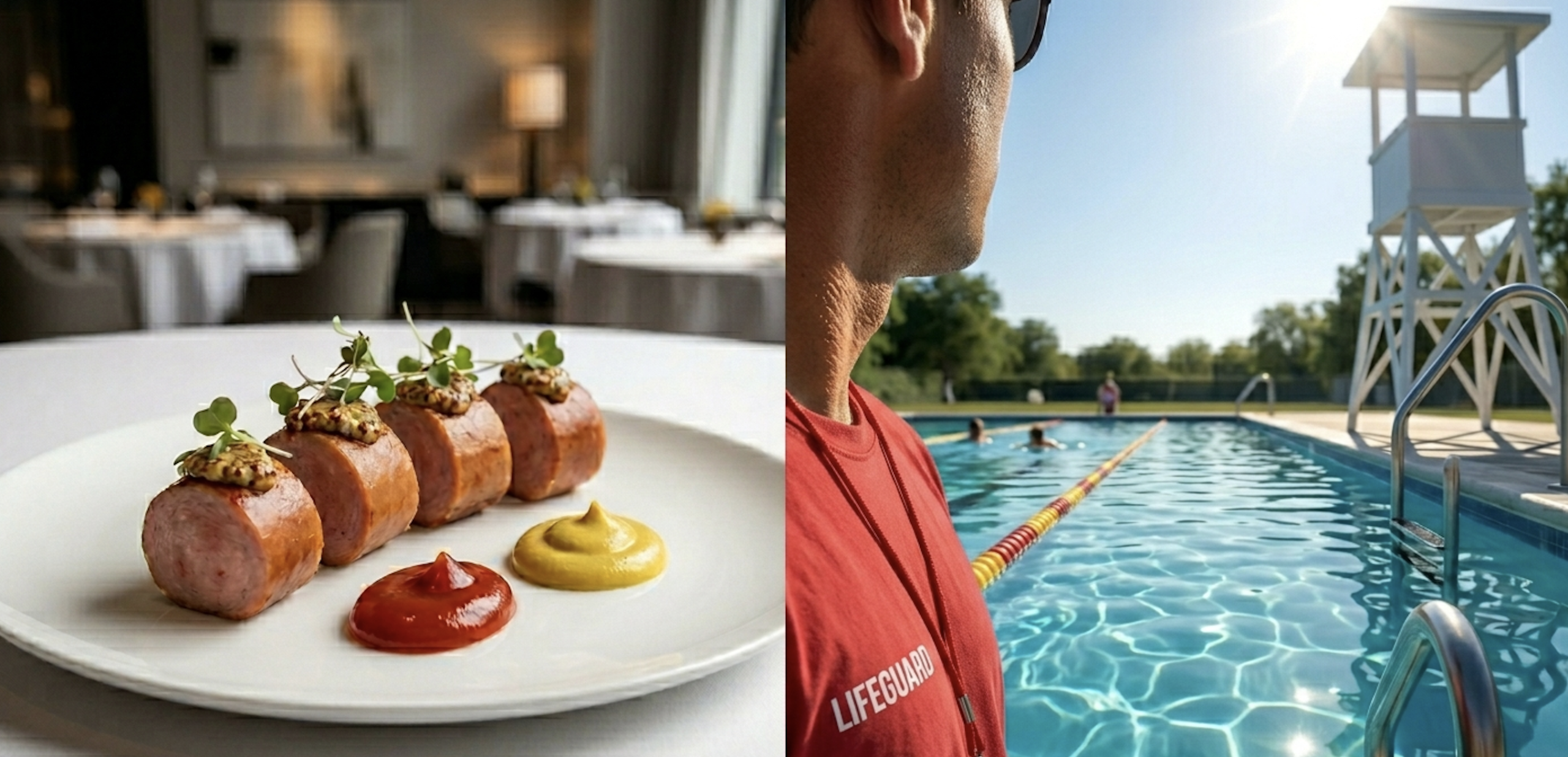
A Michelin-starred restaurant had a moment in the spotlight for serving a hot dog. Not because the chef abandoned fine dining, nor because New York street food suddenly found its way onto a tasting menu. The story, made famous in Will Guidara’s Unreasonable Hospitality, involved guests dining at Eleven Madison Park who mentioned that one thing they hadn’t managed to do during their visit to New York was try a traditional street-vendor hot dog.
Most restaurants would have acknowledged the comment and moved on. Instead, Will ran to purchase a hot dog from a street cart, which was later presented as a surprise course.
The reason the story resonates is not because the hot dog is important, but because it demonstrates a skill that is becoming increasingly valuable in every profession: the ability – and the care– to notice what others miss.
Long before Unreasonable Hospitality, The Ritz-Carlton built a culture around a simple philosophy: “We are Ladies and Gentlemen serving Ladies and Gentlemen.” The statement says little about the hotel and everything about trust. Guests may never see the systems behind the experience, but they feel the confidence those systems create.
The same principle applies in aquatic operations. A parent watching their child enter a wave pool cannot evaluate surveillance coverage, assess rescue readiness, or determine whether an emergency action plan has been rehearsed effectively. They have no visibility into the hours of training, coaching, internal or external auditing and preparation taking place behind the scenes.

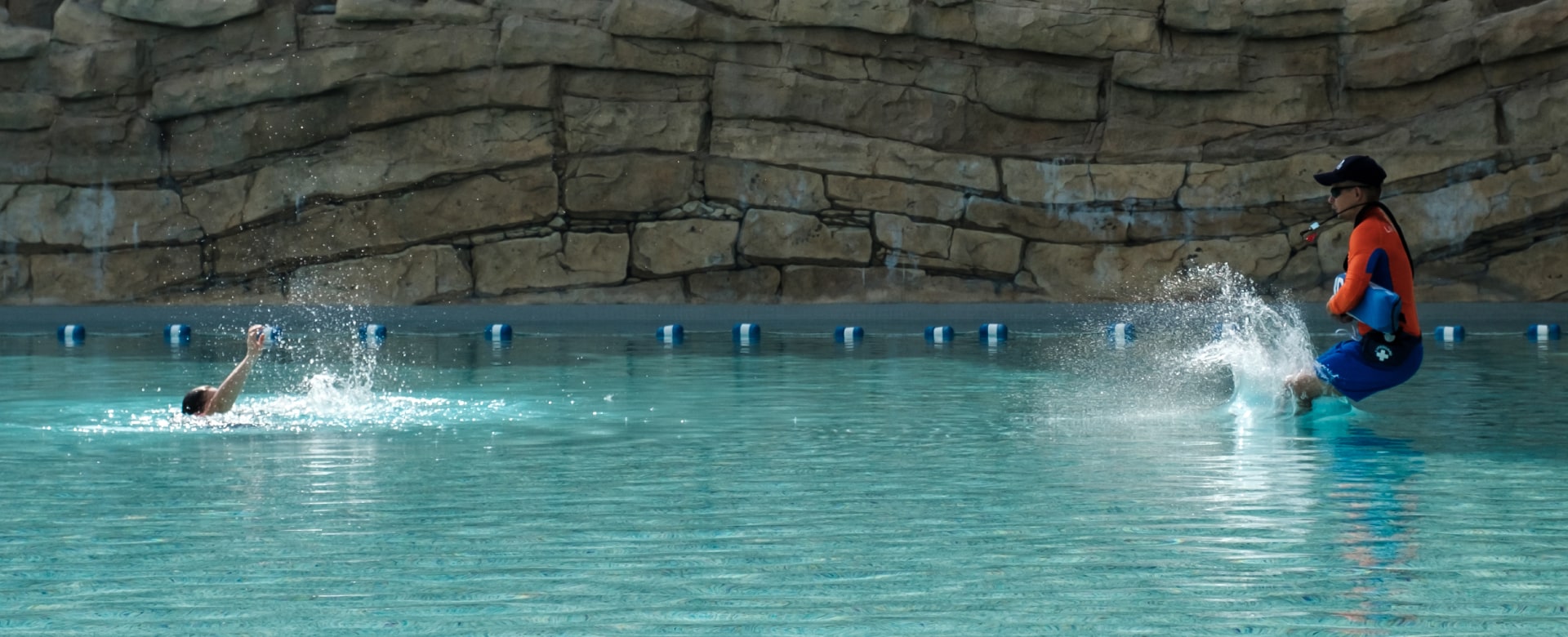
And yet, within moments of entering the facility, they have formed an opinion. They notice whether lifeguards appear attentive. They observe how staff interact with guests. They pick up on whether the operation feels organised, professional and under control. Consciously or subconsciously, they are asking: “Can I trust this place?”
Trust is the guest-facing outcome of effective safety. But trust, like hospitality, is built long before the guest notices it.
The most effective lifeguards are not always the ones who make the most rescues. They are the ones who prevent the rescue from ever being needed.
Ask someone to describe an exceptional lifeguard and the conversation will often turn to rescues. It’s understandable; rescues are visible. They demonstrate skill under pressure and represent the culmination of training and preparation. And yet rescue counts alone is a misleading indicator of lifeguard performance.
The strongest aquatic professionals are often distinguished not by how they respond when an emergency unfolds, but by how effectively they recognise the subtle signs that one may be developing. A child venturing a little further from their comfort zone, a guest whose behaviour has changed, or a lapse in vigilance that requires coaching before it becomes a concern. These moments rarely attract attention because nothing dramatic happens.
In many cases, that is precisely the point.
Like the hospitality professional who notices an unspoken need before it is voiced, exceptional aquatic professionals develop an ability to recognise and act upon small signals before they become significant problems. Their greatest successes are often measured not by the emergencies they manage, but by the emergencies that never materialise.
The challenge, of course, is that prevention doesn’t create headlines. Social media doesn’t shout about the incident that never happened, nor do parents leave glowing reviews celebrating the emergency that was avoided. The most successful acts of drowning prevention often pass completely unnoticed by everyone except the professionals responsible for them.
This creates a paradox within aquatic operations. The better an organisation becomes at recognising and addressing risk, the fewer opportunities there are for others to see the value of that work. Success becomes increasingly invisible.
No guest remembers the emergency that never happened. Yet those invisible moments shape every aquatic experience.
Guests do not see the “Stop and Watch” conversation that improved a lifeguard’s vigilance. They do not see the supervisor who corrected a deficiency before it became a problem. They do not see the hours spent rehearsing emergency procedures or refining operational standards.

Behind the scenes, countless small actions take place every day – coaching conversations, proactive interventions, in-service training and the constant commitment to maintaining standards.
The world’s best hospitality organisations understand that trust is built through hundreds of small actions performed consistently over time. American leadership and self-development author John C. Maxwell said, “Small disciplines repeated with consistency every day lead to great achievements.”
Our aquatic operations are no different.
Done right, what our guests experience is confidence: the comfort of knowing that someone is paying attention and the freedom to be present in the moment with family, to try the newest slide at the park or while away the hours in the wave pool.
Building that kind of culture requires more than procedures and policies. It requires leaders who can recognise potential before it becomes a problem, develop people before performance declines and create environments where prevention is valued as highly as response.
E&A’s vanGUARD Aquatics Leadership Program was designed to help current and aspiring aquatic leaders do exactly that. Strengthening the operational awareness, leadership capability and the proactive mindset that underpins exceptional guest experiences, it is available as an online, in person or blended learning program. For more information on this and our other services, please fill out a contact form.
About SST: Safety Skills Training(SST) is a global leader in aquatic risk management, partnering with top waterparks, resorts, schools and recreational facilities to deliver high-impact safety solutions. Backed by decades of operational expertise and powered by evidence-based practices, SST provides consulting, audits, and capacity-building programs that raise industry standards. As the exclusive Middle East partner of Ellis & Associates, SST brings internationally recognized lifeguard and aquatic training to the region. Our mission is to help clients reduce risk, elevate performance and create safer guest experiences.
About Ellis International: Founded in 1983, Jeff Ellis & Associates, also known as E&A, is an international aquatic safety and risk management consulting firm dedicated to the prevention and elimination of loss due to drowning. E&A provides lifeguard instructor training, aquatic risk management services, accident investigation, litigation support, emergency care training, learn to swim and continuing education programs in addition to water park design and expansion consulting.
Darlene
June 23, 2026Love this article