
From Surviving to Thriving: Rethinking Aquatic Safety in New Zealand with Alex Calwell
What it takes to move from compliance-driven safety to confident, proactive lifeguarding: and why that shift matters now.
Most aquatic facilities, whether in New Zealand or anywhere in the world, are built on the same intention: to keep people safe. And in many cases, they do that well. But across the industry, there’s a growing recognition that “safe” isn’t the end goal anymore; because being safe isn’t the same as being consistent. Or confident. Or proactive. That’s where the conversation is starting to shift. For Alex Calwell ARPro, that shift isn’t theoretical, but something he’s seen evolve across nearly three decades in aquatics. From starting as a lifeguard in 1995 to managing major facilities, he now supports teams nationwide through Thrives Places and Spaces with a perspective has been shaped both locally and internationally.
What stands out isn’t that New Zealand is behind. “New Zealand has solid foundations,” he says. “We have experienced operators, committed teams, and strong community facilities. The opportunity now is to build on that and take things further.”
The challenges being faced in New Zealand (such as staff retention, time-poor leaders, fragmented training pathways) aren’t unique to one country. “These are industry-wide issues,” Alex says. “But how we respond to them makes the difference.” Across New Zealand, aquatic facilities play a vital role in their communities. They are busy, multi-use environments, supporting everything from learn-to-swim to high-performance competitive training and public recreational swims. Within that complexity, teams are already doing a lot right. But like many parts of the global aquatics industry, consistency can be difficult to maintain at scale. “Some facilities have dedicated training officers, others don’t,” Alex explains. “It’s not a capability issue, it’s about creating consistency and clarity in how teams are trained and supported.”
In his work across facilities, Alex has seen a wide spectrum of approaches. “Some organisations are really doing well; others struggle with turnover or limited development pathways,” he says. Across both ends, he identifies key opportunities: strengthening the link between first aid and aquatic-specific scenarios, building confidence in lifeguards and in supporting leaders to develop their teams.
“For me, one of the biggest shifts has been viewing training not as separate modules but as a connected system,” Alex says.

“It’s about linking lifeguard skills and leadership development with operational consistency and ongoing in-service training.
”This is where working with SST has provided a different perspective. “What really stood out was the collaborative nature and values-led approach,” he says. “It felt like something that could genuinely add value here.”
One of the key advantages of a globally connected approach is access to tested ideas and frameworks, but, applying them locally requires flexible adaptation. “There are differences in how we operate and in our guidelines,” Alex explains. “My role is translating the global programmes so they work in New Zealand while keeping teams confident and compliant.”
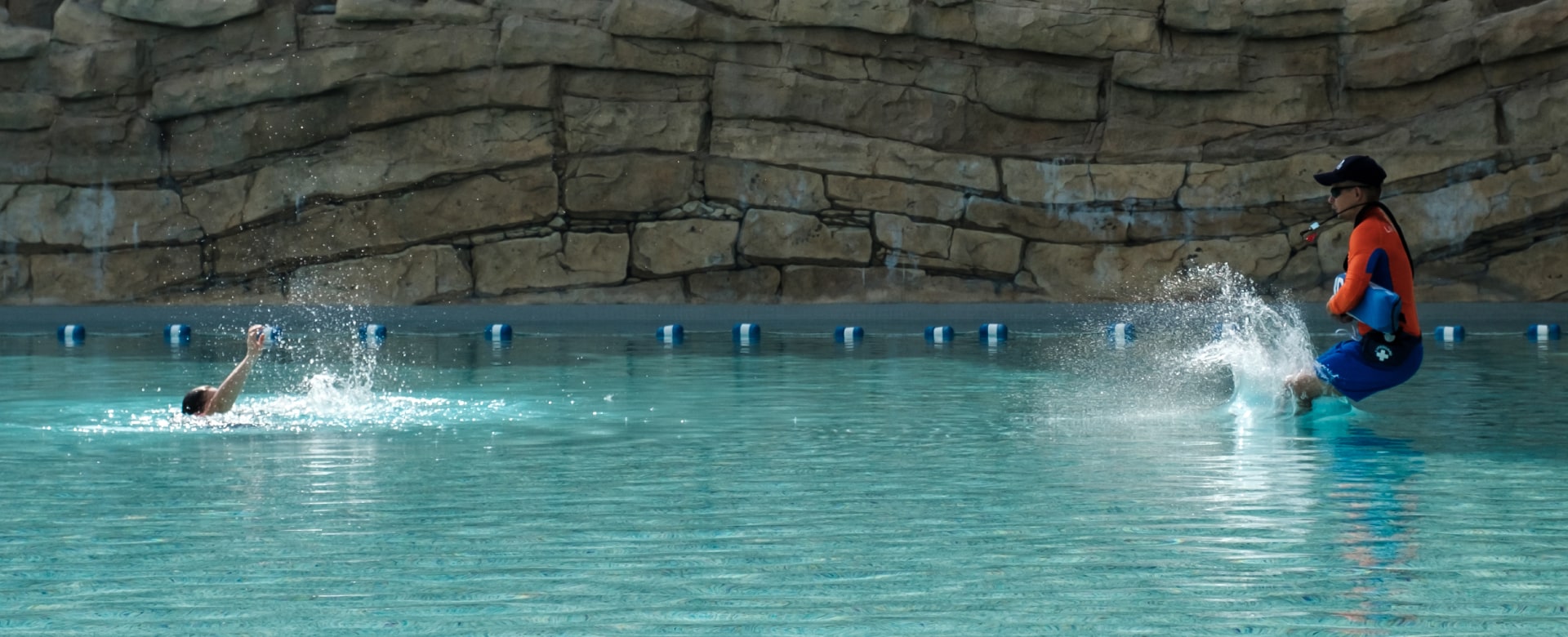
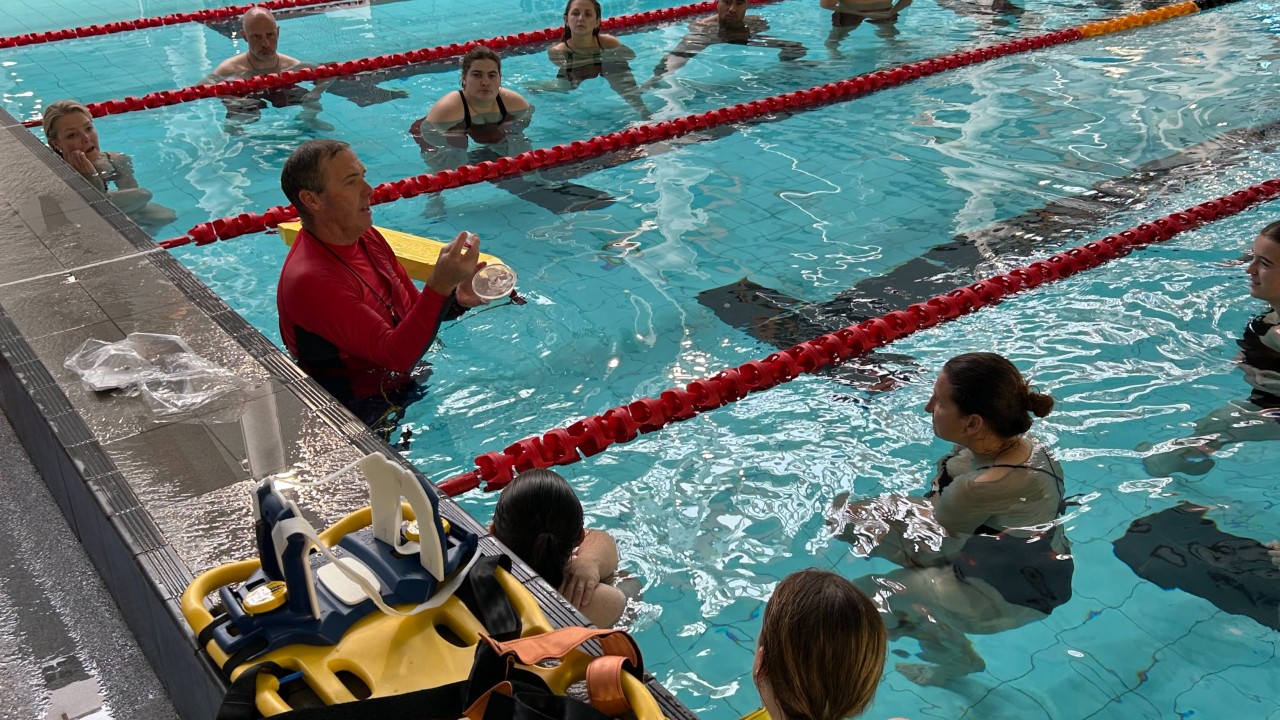
Implementing these approaches doesn’t happen all at once. “It starts with practical changes. We refine patrolling, introduce structured deployment, embed scenario-based training,” Alex says. From there, the support moves to leadership where he coaches staff, reinforces learning and maintains ongoing contact with operational support.
The results are clear. “The biggest change I’ve seen is confidence,” Alex says. “Leaders make better decisions, lifeguards operate with clarity and the whole team becomes more proactive. You can feel it when you walk into a facility where’s engagement and energy, but most of all awareness on the pool side.
While frameworks and training matter, Alex also emphasizes the importance of leadership.
“The biggest difference is senior buy-in: not just supporting the change, but actively being part of it. Leaders create the conditions for their teams to succeed, and that’s what drives consistency and safety culture.”

For facilities reviewing their current approach, Alex offers a simple starting point:
“Ask yourself: how do you know that your training works? How confident are your teams in real scenarios? How do you measure performance?” The shift Alex is helping to drive isn’t about fixing what’s broken. “It’s about building on what already works and taking it further,” he says. “Moving beyond minimum standards and creating consistent behaviours. Ultimately, creating environments where teams don’t just exist and survive, but thrive.”
With strong foundations already in place and the openness to new approaches, New Zealand’s aquatic industry is well positioned for its next phase. For Alex, the journey continues.
“My goal is simple: help facilities strengthen their teams and raise standards to keep people safe – everywhere, every day.”
SST are proud to partner with Alex and the Thrives Spaces and Places team. Their commitment to raising standards exemplify the kind of impact we strive for.
To find out how SST can support your facility, visit our website here or get in touch with us through our contact form.